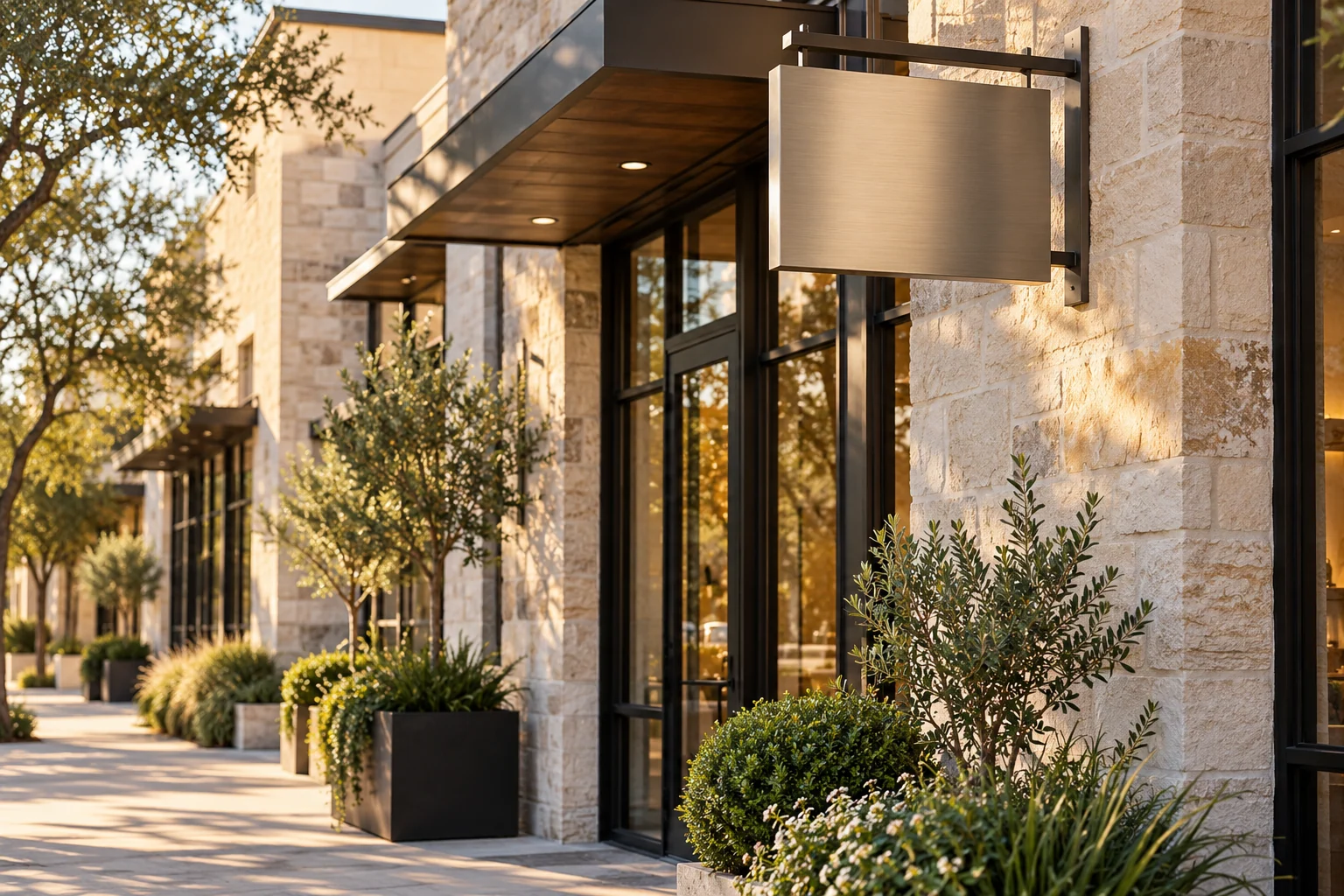
A storefront sign is often the first handshake a business offers a passerby. For many North Texas entrepreneurs, that handshake is guided by a precise aesthetic: a specific shade of brushed gold, a particular weight of serif font, or a way that light catches a textured surface at dusk. However, a strong visual preference does not always translate directly into a functional piece of street-level communication.
The Tension of Aesthetic Intent
The challenge often arises when a business owner possesses a clear sense of style but an unclear sense of utility. You might have a collection of high-resolution photographs of textures, color palettes, and lighting styles that perfectly capture the mood of your brand. These images are invaluable assets for a designer, yet they represent an ideal rather than a blueprint. The tradeoff lies between the uncompromising pursuit of a specific look and the practical requirements of visibility, durability, and local standards.
For example, if you have fallen in love with a delicate, backlit glass sign seen in a boutique catalog, you must weigh that elegance against the daily realities of your specific location. A sign that looks stunning in a controlled photograph may face different challenges when exposed to the wind, dust, or intense sunlight common to our region. The goal is to find the point where your visual identity remains intact while the physical object remains resilient.
Preparing Your Visual Brief
Before meeting with a sign provider, organize your visual preferences into a coherent package. Rather than just showing a single image, provide a range of photographs that illustrate the scale and light quality you desire. This helps the professional understand if you are looking for something subtle and integrated into the architecture, or something bold and commanding. Having these references ready allows the conversation to move quickly from "what it looks like" to "how it works."
Inquiry and Feasibility
Once you have your visual references, the conversation shifts toward the technical and regulatory landscape. A professional sign maker can help bridge the gap between your mood board and the physical mounting of a sign. Instead of assuming a design is ready for installation, use the consultation to test the limits of your vision.
Ask the provider how your preferred materials and lighting styles will hold up under local environmental conditions. Inquire about the feasibility of the specific dimensions and mounting methods you have in mind. Crucially, ask the provider which local approvals may be necessary for your specific type of signage and who would be responsible for arranging those permissions. By centering your discussion on these practicalities, you ensure that your aesthetic vision survives the transition from a photograph to a permanent part of your business frontage.


